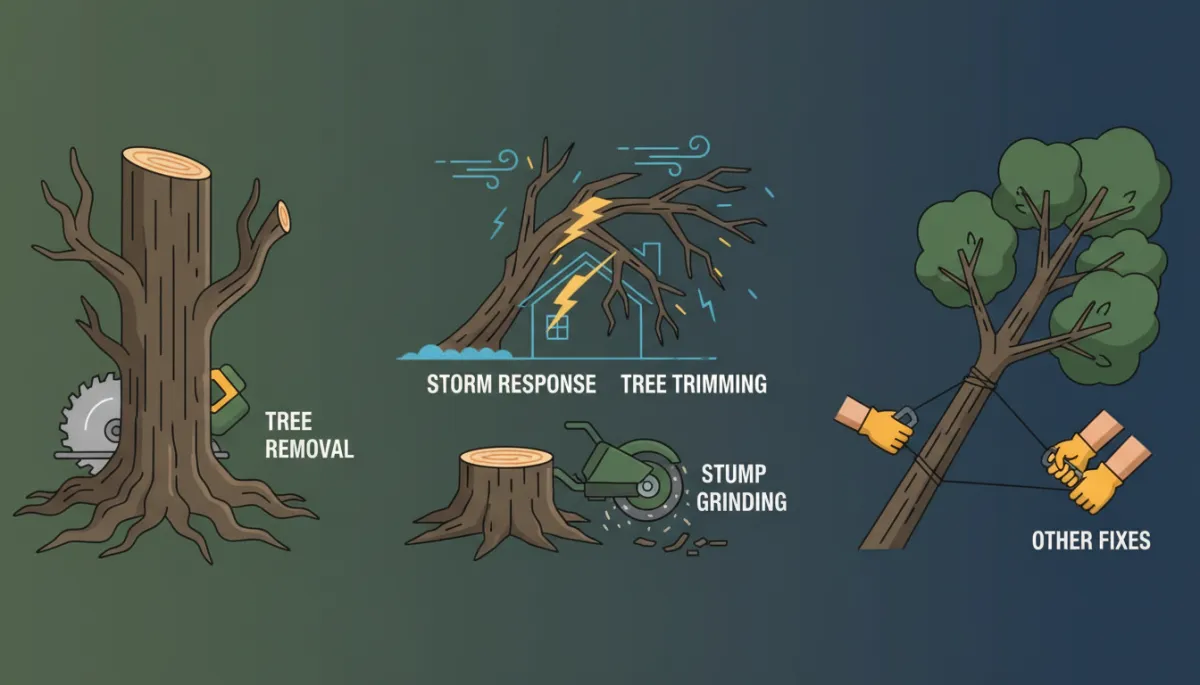
Understanding Tree Emergencies: What You Need to Know
Tree Care, Emergency Tree Services
What Really Counts as a Tree Emergency?
Not every leaning trunk or broken branch is a crisis, but some situations demand fast, professional attention. Understanding what qualifies as a tree emergency can protect your home, your family, and your budget.
What Is a Tree Emergency?
A tree emergency is any tree-related situation that poses an immediate risk to people, property, or essential services. Think of it as right now danger, not “we should deal with this someday.” Common red flags include:
Large limbs hanging or cracked over roofs, driveways, or play areas
Trees uprooted, leaning suddenly, or moving at the base after a storm
Trees or limbs resting on homes, vehicles, fences, or power lines
💡 Pro Tip: If you are worried a tree might fall within the next 24–48 hours, treat it as an emergency and call a professional.
Emergency Tree Removal: When the Tree Has to Go
Emergency tree removal is usually reserved for situations where a tree is already failing or has become too dangerous to keep. This includes:
A tree that has fallen onto a roof, garage, or vehicle
A severely cracked or split trunk that could fail at any moment
A tree leaning suddenly after heavy rain or wind, especially toward a structure or busy area
In emergencies, crews may perform a “make-safe” removal first—carefully taking off the most hazardous sections—then return later to finish grinding the stump and cleaning up once the immediate danger is gone.
Emergency Tree Trimming: Not Every Case Needs Removal
Sometimes the whole tree is not the problem—just a few dangerous limbs. Emergency tree trimming can quickly reduce risk while preserving a healthy tree. You may need urgent trimming if:
Large dead or broken branches are hanging over walkways or parking areas
Branches are rubbing against your roof, gutters, or windows in high winds
Limbs are obstructing emergency access routes, driveways, or street views
Skilled arborists can selectively remove hazardous branches, balance the canopy, and reduce the chance of future storm damage—all without sacrificing the shade and beauty your tree provides.
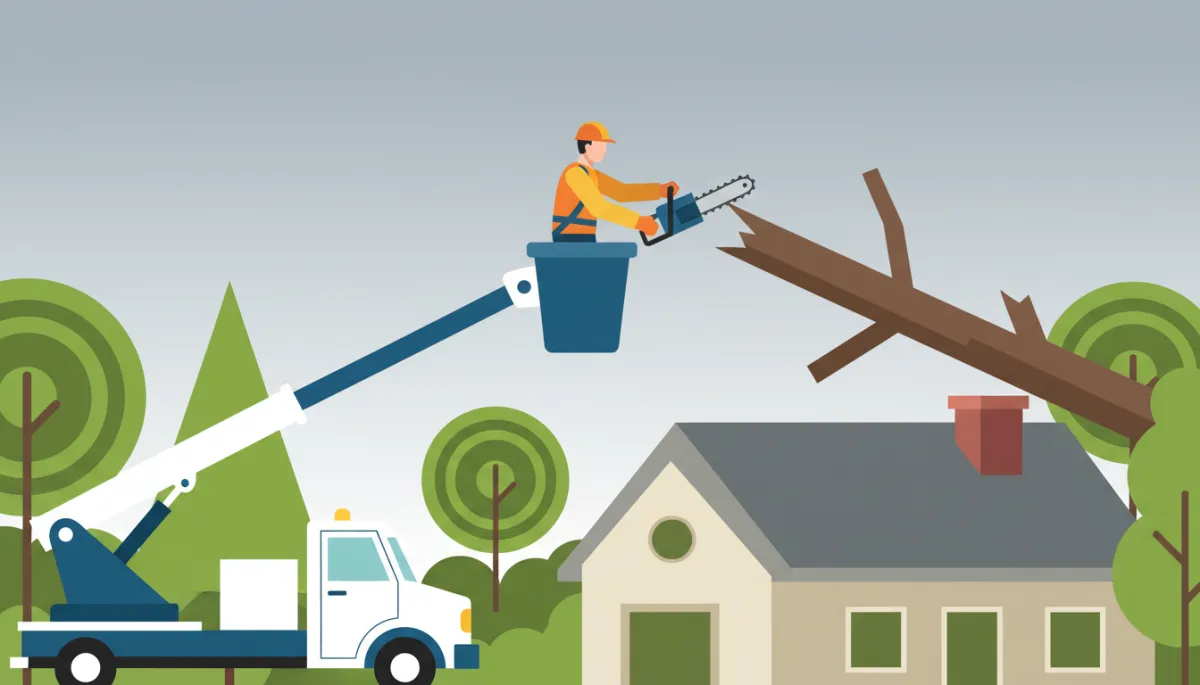
Targeted emergency trimming often saves healthy trees while removing immediate hazards.
Stump Grinding: The Last Step in Making Your Yard Safe
After an emergency tree removal, you are often left with a jagged stump. While it may not feel urgent, stump grinding is an important safety and appearance issue. A leftover stump can:
Create a trip hazard for children, guests, and lawn equipment
Attract pests like termites, ants, and fungi that may spread to other trees or even your home
Interfere with replanting, landscaping, or future construction plans
Grinding the stump below ground level removes these risks and allows you to restore the area with grass, a new tree, or another landscape feature.
Storm Response: Fast Action After Severe Weather
Severe storms can turn healthy trees into hazards overnight. A professional storm response team focuses on stabilizing the situation first and then restoring your property. Typical emergency services include:
Clearing fallen trees from driveways, roads, and entryways so you can safely get in and out
Removing or securing trees and limbs that are resting on structures or leaning dangerously
Coordinating with utility providers if trees are tangled with power lines (never attempt this yourself)
⚠️ Warning: If a tree is touching or near power lines, do not approach it. Call your utility company and an emergency tree service immediately.
Other Emergency Fixes That Make a Big Difference
Not every urgent situation calls for a chainsaw. In some cases, other fixes can stabilize a tree and prevent future emergencies, such as:
Cabling and bracing: Installing support systems to help weak or split limbs withstand wind and weight
Soil and root care: Addressing root damage, compaction, or drainage problems that could lead to instability
Preventive pruning plans: Scheduling regular maintenance so small issues never turn into emergencies
When in Doubt, Get a Professional Opinion
If you are unsure whether a tree situation is truly an emergency, it is always safer to ask. A qualified tree care company can assess the risk, recommend the right mix of removal, trimming, stump grinding, storm response, or other fixes, and help you plan long-term care so your trees stay assets—not accidents waiting to happen.
